Filter Noise.Fix Real Risk.
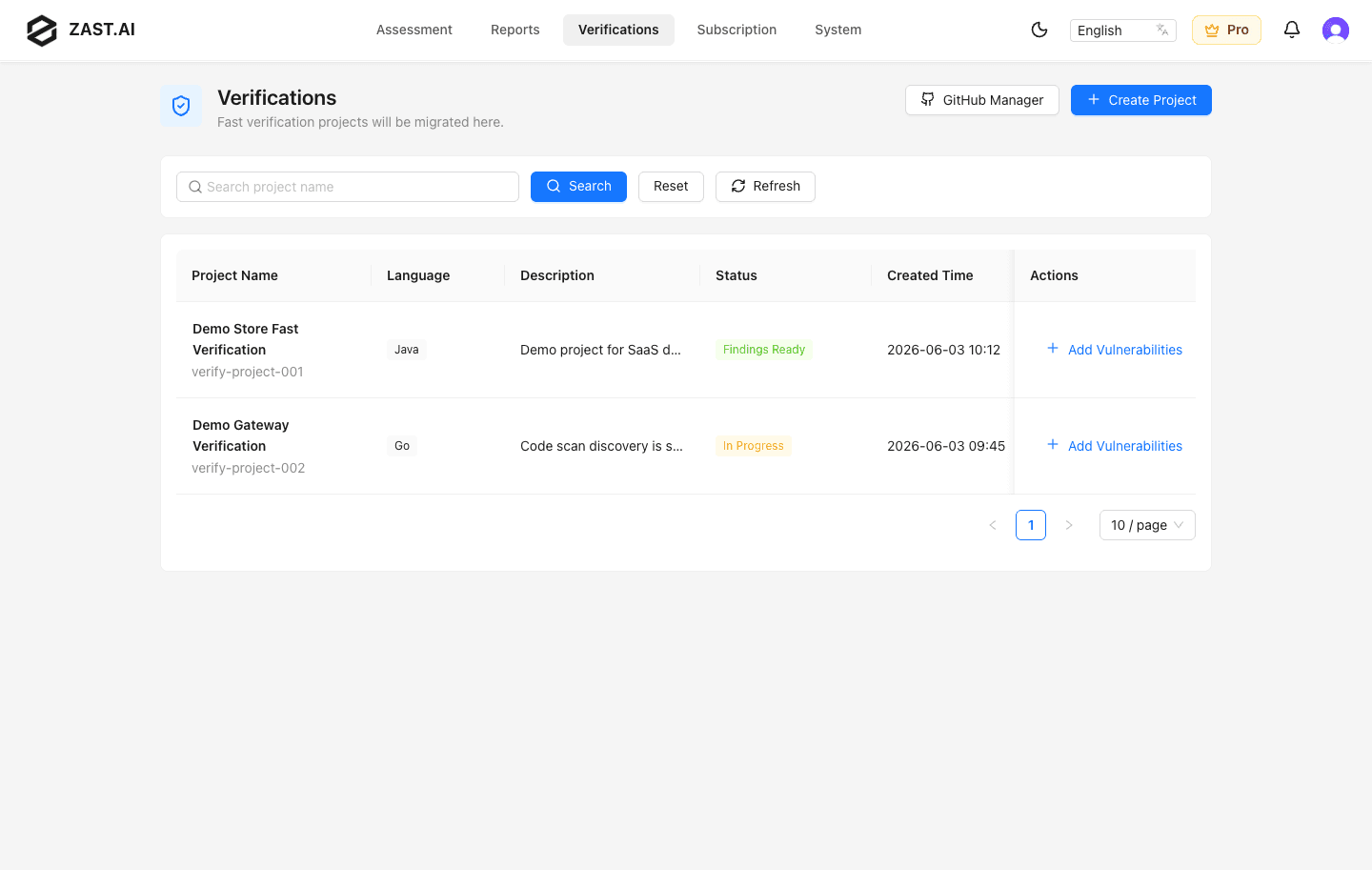
Fast Verification turns candidate findings into confirmed risk signals for GitHub and CI workflows.
Built for teams that already have findings and need confidence.
Why it matters
Findings are everywhere.
Findings keep multiplying
CodeQL, Semgrep, Snyk, internal checks, and AI review can all produce candidate issues.
Triage delays fixes
Security teams spend time proving whether each issue deserves remediation.
Developers need proof
Verified evidence is easier to act on than another long list of possible problems.
Workflow
From candidate input to confirmed result.
Move from scanner output to verified evidence without handing every possible issue to humans first.
Upload source
Start with the target codebase or project package so ZAST can reason over real code paths.
Import SARIF
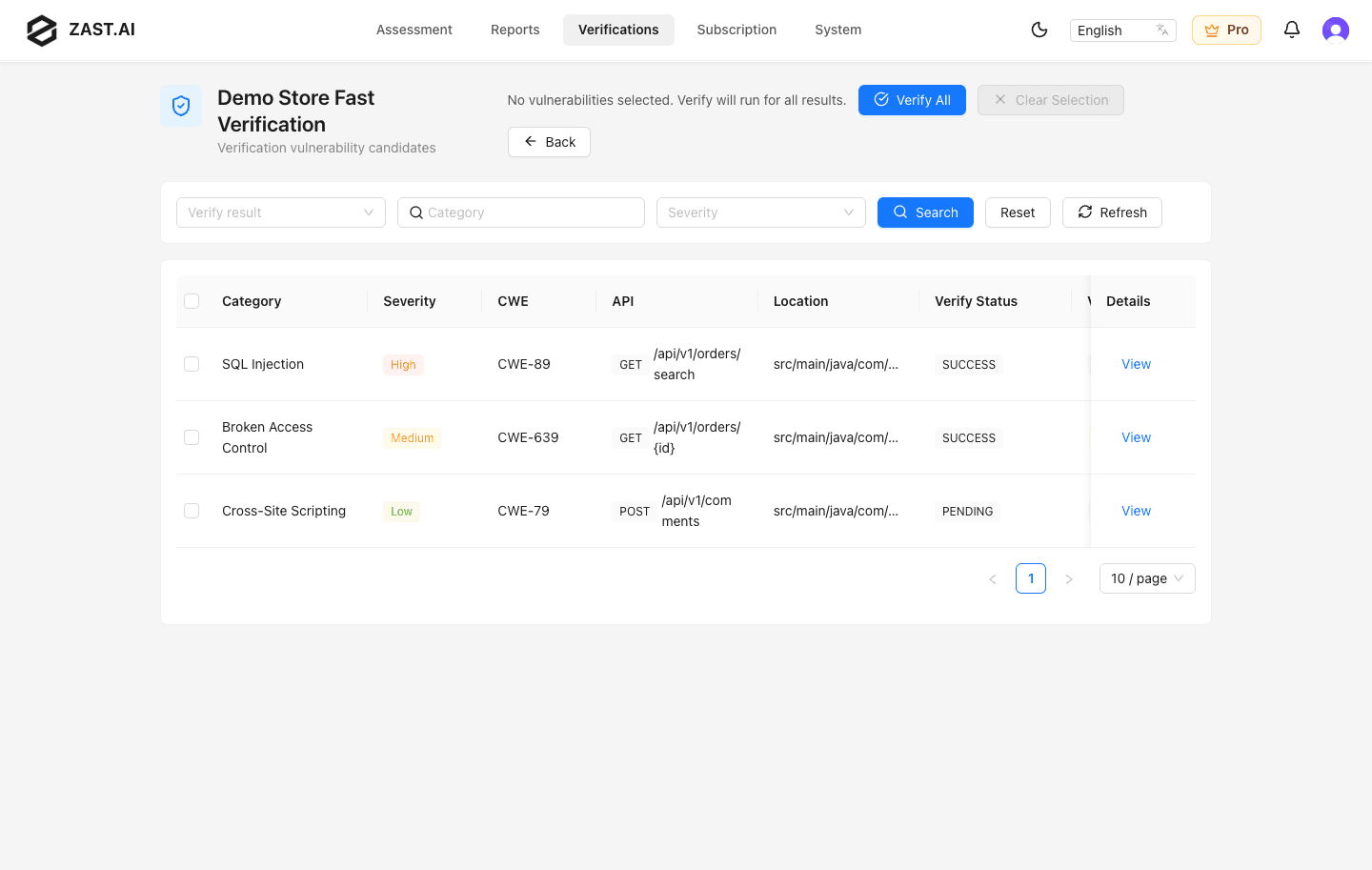
Bring in candidate results from tools such as CodeQL, Semgrep, Snyk, Checkmarx, or Fortify.
Generate PoC
Create exploit evidence to test whether reported findings actually hold.
Confirm risk
Send verified results back to GitHub, CI, and remediation workflows.
Verification
Scanning finds. Verification confirms.
Traditional scanning
- Reports possible issues
- Creates candidate findings
- Often leaves triage to humans
- Can overwhelm teams with noise
Fast Verification
- Validates whether findings hold
- Uses deeper path analysis and PoC evidence
- Prioritizes actionable results
- Helps teams fix what matters first
Use cases
Where teams use it first.
Reduce SAST triage noise
Filter candidate findings before the team spends hours on manual confirmation.
Validate SARIF results
Use SARIF output from common tools as candidate input for deeper verification.
Bring proof into CI
Move from long reports to workflow feedback that developers can act on.
Evidence
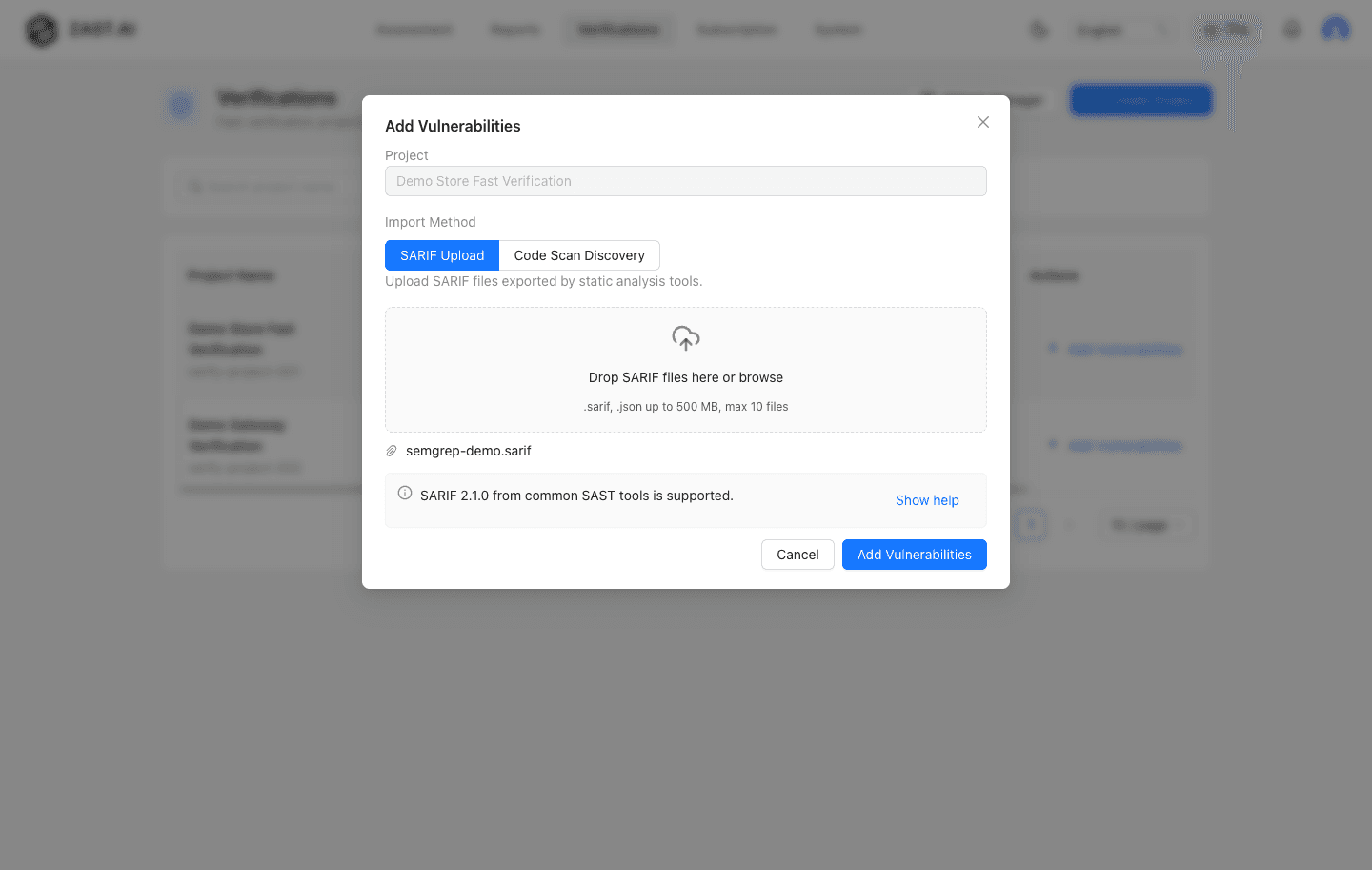
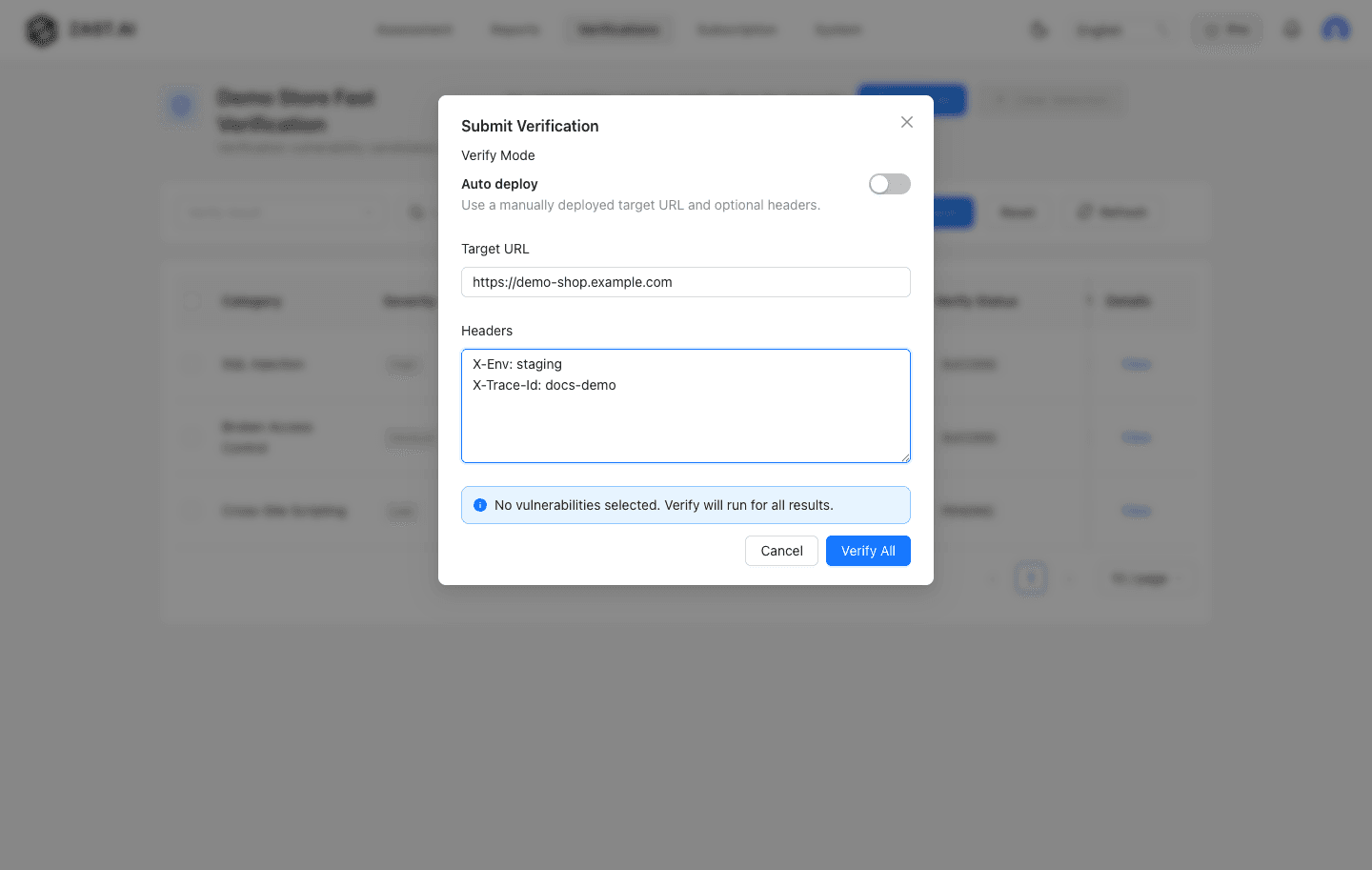
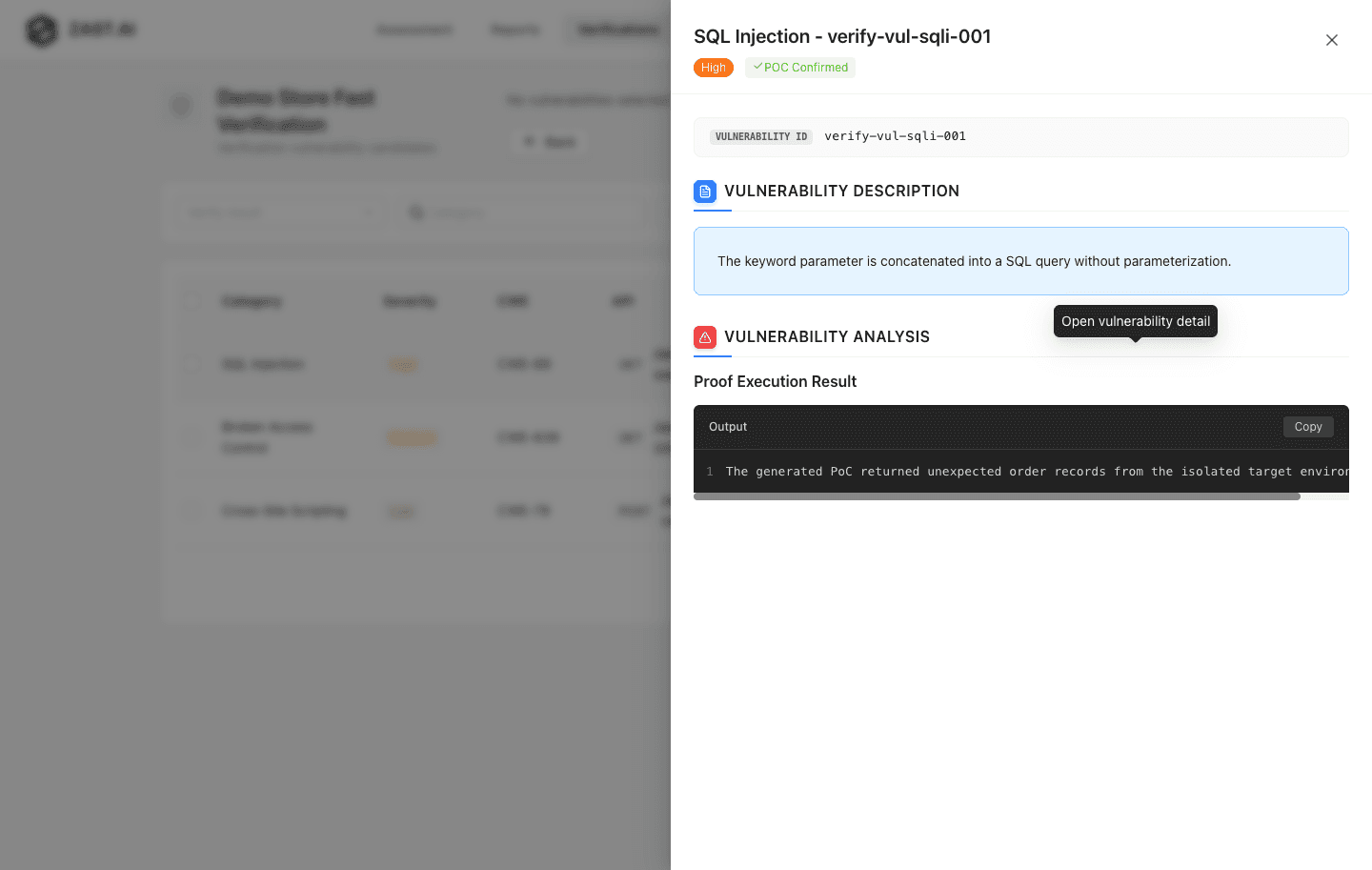
Verified findings come with context.
Review verification history, evidence, and detail views when a finding is confirmed.
FAQ
Common Questions
What is Fast Verification?+
Fast Verification is a ZAST.AI capability that validates candidate vulnerabilities and confirms which findings actually hold in the target.
Does it replace SAST?+
No. It works after scanners and code analysis tools by validating their candidate findings and reducing manual triage noise.
What inputs does it support?+
It starts with source code and can optionally ingest SARIF results from tools such as CodeQL, Semgrep, Snyk, Checkmarx, and Fortify.
How is it different from traditional scanning?+
Traditional scanning reports potential issues. Fast Verification checks whether those issues actually hold and produces higher-confidence results.
Can it work with GitHub and CI workflows?+
Yes. Fast Verification is designed to bring verified results closer to GitHub, CI, and remediation workflows.